Showing posts with label God and Faith. Show all posts

The Voices We Entertain


In late December, Joel and I traveled for his work — by ourselves, without our children — for four days, three nights. Before this, he and I only had been away together without kids for four days, so this singular trip doubled the amount of sans-kid travel we've had in the nearly 20 years we've been parents.

As you keep our entirely child-free status in mind, let me tell you the story of how he and I took an afternoon hike. The trail, which was steeper than either of us had anticipated, took three hours to ascend and descend. Given the perfect weather, the trail had a fair amount of activity, and during the descent we had two fellow hikers trailing us at a relatively close distance.

Close enough to hear their conversation, at least.

They must have been late teens or early twenties. It was unclear if they were brother and sister or boyfriend and girlfriend, but it was exceptionally clear that they were bickering.

Bicker. Bicker. Bicker.

Pick. Pick. Pick.

Snarky comment. Snarky response. 

I kept my eyes on the ground, scanning the terrain for my next good foothold, and noticed that I was growing more frustrated with each step. It was a beautiful day! We were supposed to be enjoying a hike! But these knuckleheads were filling our airwaves with argument, complaint, and irritation.

That's when I had an epiphany. These were somebody's kids, but they weren't my kids. I wasn't responsible for my own kids this day, much less someone else's. I didn't have to walk near them. I didn't have to stick with them. I didn't have to let their voices fill my ears. 

I looked at Joel and said, "I can't listen to their arguing anymore. We've got to let them pass." He nodded quick agreement.

I'm not sure if they heard me. It's possible. My epiphany had given me a bit of a rush, and I hadn't guarded that excitement by lowering my voice.  We stepped to the side, pausing until they passed, then waited a few more moments to create enough distance between us before we continued.

The remainder of the hike was much more pleasant. I don't know why we hadn't pulled off to the side to let them pass earlier. Nobody needs that much negativity filling their ears.

This week I remembered this lesson as I thought about the voices that I let myself listen to, the voices I let trail behind me as I move through life. For a portion of time during this hike, I hadn't even contemplate that I had a choice. The kids were behind me, they were complaining, and that seemed like the end of it. Suck it up, buttercup, I could have said to myself. It's a bad hand you were dealt, but these are the people following you down the mountain Just deal with it.

But that's not true at all. We had agency. We adjusted our journey. We better positioned ourselves. We chose to let the negative voices pass by rather than letting them trail us.

This past week, I've had several times where I needed to get intentional about the voices that I've listened to. The voices that were trailing me as I moved about my day, telling me that I had messed up. The voices, whispering accusations that I'm not good enough. The voices that do nothing but create irritation, cast doubt, and suck joy.

In the gospel of John, Jesus reminds us that sheep recognize the voice of their shepherd, and that he is our good shepherd. In contrast, we're we're told that Satan is the accuser. When the running commentary in my head is filled with accusation, it's time to separate myself from that voice. It's not from my shepherd. Metaphorically, I can step aside, let the accusations pass, and choose not to make them my traveling companions. I can choose to listen to what the the Lord is saying to me and about me.

We get to choose. We get to choose the voices we entertain. 

1

The Gift of Not Knowing It All


Several years ago, the university where I teach selected Dave Eggers' novel The Circle as its common text, meaning that I had to incorporate it into my Rhetoric and Civic Life curriculum. I didn't like the book. Neither did the public at large, apparently, with its film adaptation garnering a weak 16/100 rating from Rotten Tomatoes.

To be fair, you're not supposed to "like" The Circle. Its plot isn't characterized by warmth, enjoyable characters, or redemption. One student said, without a trace of exaggeration, "This is the scariest book I've ever read."

The novel wasn't in the horror genre; it was dystopian. Yet, I understood my student's comment. The Circle was terrifying. In an effort to excel at her new job at a tech company called The Circle, the main character, a recent college grad named Mae, agrees to pilot their emerging technology: a 24/7 body camera that captures and broadcasts every aspect of her life. On the surface, this premise might sound more intrusive than downright terrifying, of course. But I still remember the evening when, stretched out on my couch reading a particularly harrowing chapter, I roughly tossed the book onto the floor because I needed to take a break. My stress level had ratcheted.

Despite The Circle's promise that the complete transparency of their social networks would create a more honest society (and even a flourishing democracy), Mae's life — and the lives of those around her — were destroyed. With every lived moment, millions of followers zinged Mae with messages, commenting on her every conversation, action, and decision. As an employee eager to please The Circle, Mae fully bought into the company's ideologies, yet she shattered privacy, blurred every possible work-life boundary, and ruined real relationships.

But amplify this further and imagine the premise scaled not only to one person (Mae), but to the entire world. The Circle wanted every single person's life to be continually shared, known, consumed, connected, and broadcast.


Even typing this, my cortisol spikes. I want to go sit by a lake, off the grid.

In certain ways, we already experience forms of this. There's infinite content to consume, millions of sound bites to swallow, and abundant ways to share. You have something to say? Our culture would encourage, by all means, blast it. Say it all, read it all, follow it all, absorb it all, respond to it all, know it all.

But this is impossible. No human perfectly can manage every one of their own thoughts and interactions, much less to perfectly manage the continual reactions of every other human to their thoughts and interactions, or to perfectly manage hearing and knowing everyone else's every single thought and interaction.

That much knowledge vastly exceeds our finite human capacity. We can't follow, absorb, respond to, or know it all. It's dizzying.

I haven't thought about The Circle for years, so why did I remember it now? It's because I recently heard a message about God's omniscience. He knows all — all things macro, all things micro, all things past, all things present, all things future. He knows every thought we have and every word on our tongue before we speak it. He knows when we sit and when we stand, our comings and our goings. He hems us in, behind and before. He knows this about us. He knows this about everyone.

He knows all. It's well within his capacity.

In response to this omniscience, David writes in the Psalms, "Such knowledge is too lofty for me, too wonderful for me to attain."

This is a beautiful acknowledgement. It reinforces how our thoughts are not like God's thoughts and our ways are not like His ways. We can't know all.

In fact, I often can't understand myself perfectly. I struggle managing relatively small-scale things, like accurately keeping on top of group text threads with my friends. I'm utterly non-omniscient. In moments when I feel like I have to know it all, respond to it all, share it all, consume it all, I'm crushed by the claustrophobic cognitive and emotional weight.

Sometimes limitations are gifts. Not knowing everything is a gift.

God didn't create us to know everything. Some might be angry that God adamantly withholds this ability from us, as if he's like Jack Nicholas in A Few Good Men declaring, "You can't handle the truth!" But I see the limitation as merciful, like a kind father not forcing a child to carry a suitcase that's impossible for the child to lift, saying, "That's too heavy for you. That's my bag to carry, not yours. Set that burden down. It's mine to lift."

Whether or not Eggers would appreciate this spiritual interpretation is debatable, of course. Still, one of the many reasons The Circle arouses such stress in readers is because it captures not only how impossible, but also how devastating, it is for humans to attempt omniscience.

Granted, like many people, I'm hardwired to figure things out, reason through arguments, mull over conversations, interpret nuances, and make sense of it all. I like knowing and understanding.

But as a follower of Jesus, this isn't always what's required of us. Thank God.

Trust in the Lord with all your heart, and lean not on your own understanding. In all your ways acknowledge him, and he will make your paths straight.

Proverbs 3:5-6

0

Perfect Peace


A few days ago, I watched the opening episodes to season four of The Chosen at our local movie theatre. I heard about the series in passing a year ago, but I only began to watch for myself last fall when three separate people told me how deeply the show was impacting them over the series of three days.

After a few episodes, I understand why its reach is wide and profound. (If you haven't watched, I can't recommend it enough.) In the most recent episodes, we witness a brief exchange between Peter, the disciple, and Gaius, a Roman centurion. As Peter leaves, he offers the customary Jewish departure, "Shalom, shalom."

Gaius asks a question that we, as viewers, might have asked ourselves, "Why do you say it twice?"

Peter responds that "shalom" once is peace, but "shalom, shalom" is perfect peace, complete wholeness.

I've followed Jesus for thirty years, and I'm still in awe of His gift of peace. A few weeks ago, over an Olive Garden lunch of soup, salad, and breadsticks, a friend told me about her husband's recent surgery which removed a malignant tumor. During the whole process — the discovery of the tumor, the leadup to surgery, the waiting for results on the tumor's malignancy, the post-op checkup — both she and her husband had remained in complete peace.

She told me, "I knew it was serious, but somehow I never was upset. Neither was my husband. I wondered whether we should be more worked up about it." As my friend reflected, she only could attribute it to the perfect peace of God, a peace that passes all understanding, a peace that guarded their hearts and minds.

What kindness from the Lord. 

I've had many days when I'm grasping for whisps of peace in the midst of turmoil, confusion, or grief. Many times, my level of peace feels like the "shalom" (not "shalom, shalom") variety: peace-ish, but not quite perfect in its wholeness. 

But peace isn't the absence of struggle, pain, or hardship. It's the presence of God, even in the midst of a storm. I can trust a God who is both powerful and close, both all-knowing and intimate, both unsearchable in His greatness and deeply caring.

Whether or not I see it in my circumstances or feel it in my emotions, God's peace is perfect, complete, and whole. It's deeper than what's happening around me or even within me. It's a peace anchored in the Lord himself, who doesn't shift like shadows, who remains a strong tower and fortress, who understands and comforts those who grieve, who upholds us with his mighty right hand.

Shalom, shalom, indeed.
0

Small Detours


I took a small detour as I left campus today. I didn't give this detour much thought at first, but due to it, I passed a colleague friend of mine who was sitting on a bench. I had finished teaching for the day. He had an hour gap before his next class. We hadn't seen each other for a few months, which is often the case in our jobs. (On a large campus it's easy to run into your colleagues only infrequently.)

Instead of continuing on my way, I sat down. We talked about our classes. We spoke about managing family responsibilities and the work loads that we carry home. We spoke about matters of faith and living with integrity to our beliefs. We talked about how to support, instruct, and love our students well, especially when today's climate is prone to quickly argue, harshly judge, and ruthlessly cancel.

We sat on that bench for nearly an hour, and when we stood to leave, me for the parking deck and him for his classroom, we both felt mutually encouraged and strengthened.

I'm so glad I took a detour today. I'm so glad I sat down on that bench instead of merely waving and walking by. Without a doubt, this conversation was a highlight of my semester. I would have missed it without the detour.

How wonderful that God guides our steps and directs our paths. I want my heart to be sensitive to his quiet nudging. I want to follow all his detours that might lead to unexpected moments, chance conversations, and unanticipated opportunities of encouragement.

0

40 Day Stories

 
At church this morning, our pastor mentioned the prevalence of "3 day stories" and "40 day stories" in the Bible. There's plenty of each. Those "3 day stories" feel like a relatively quick resolution. It's hope restored and mess redeemed -- all in the course of a long weekend.  

But "40 day stories" are more like a slow cooker BBQ, not a microwave. It's Noah in the arc, or Moses on the mountain, or Jesus in the wilderness. These "40 day stories" require perseverance. They're more than a moment, but less than a lifetime, and when we're in the midst of one, it's a long enough time period for us to question if it'll go on forever.


I was encouraged this morning. I'm in the midst of some "40 day stories," and perhaps you are, too. If so, take heart. This is not a time to turn around and lose faith. This is a time to keep going.

Let everyone call urgently on God. Whether 3 days, or 40 days, or 40 years, let's persevere.

0

Chronic Soul Amnesia

Ann Voskamp wrote about a phenomenon she calls chronic soul amnesia. I'm prone to this condition. I learn lessons from problems, then face similar problems later on, and feel as if I'm learning the lessons again for the first time. It's like when I was parenting babies many years ago and the next baby was ready to start solid foods. I vaguely remembered that I had navigated a child through this transition before, but I forgot all the specific details about how we actually accomplished it.

I only knew that I had managed it once (or twice) already, so I trusted we could get through the process with the next child, too. And, clearly, we did. We've progressed onward and upward to teenage challenges in our household now, which are equally (if not more) messy, just in different ways.

One area of soul amnesia for me is fear. I'm pretty good at envisioning how a situation may go south. I can look at a problem, analyze its causes and effects and intricacies, and see no logical way that the dysfunction could be untangled. This is why I'm so grateful the Bible offers ample commentary on how to manage fear and worry.

Did you know how many times scripture encourages us not to be afraid? It's stated 366 times throughout the Bible. In other words, we have a reminder each day of the year, plus a bonus "fear not" for leap years.

Why do I forget that God is an every present help in trouble? It's soul amnesia, I tell you. Each time I come upon a reminder in scripture to be strong and courageous, even though I already know these verses in my heart, my soul rises up like I'm hearing them again for the first time. How necessary it is to keep these promises in our eyes and ears, on our lips, and tucked into our hearts? Say it louder for the people in the back!

Fear not, for I am with you. Do not be dismayed, for I am your God. I will strengthen you. Yes, I will help you. I will uphold you with my righteous right hand. (Isaiah 41:10)

God is fighting our battles today. We can brush off the forgetfulness and remind our souls of God's steady faithfulness.

As an aside, I'm getting to the point where I'd like to do this:


And that way, this reminder will be written visibly to help prevent my soul amnesia for all 365 days a year.
0

You've Got to Go Through


I spoke with a friend at the gym this morning who's going through a hard time. The details she offered weren't overly specific, and they didn't need to be. In between our sets of TRX mountain climbers, rowing, and sit ups, she simply told me the bare bones of her complicated and challenging circumstances.

I mostly listened. At the end, I offered a comment which felt rather lame it was so obvious. "I'm so sorry that you're facing these challenges. You're really in a tunnel right now."

She nodded and shrugged, then said, "Well, when you're in a tunnel, you've got to go through."

Such true words. I sometimes wish they weren't, but I think we've all found that we must walk through some long, dark tunnels before we see light again. We have to go through.

Not around. Not over. Through.

Later today I thought more about her statement. A verse from a beautiful psalm rose to my thoughts: "Even though I walk through the darkest valley, I will fear no evil, for you are with me; your rod and your staff, they comfort me."

Tunnel. Valley. What-have-you. The exact type of cavernous route doesn't matter. What matters is that even if we feel alone, we're not. God is with us. He's there in the tangled circumstances. He's there when we feel weary and confused. He's there when we're in need of comfort. He's there with his rod and staff, those kind offerings of his support to lean upon and his guidance to direct our steps.

When we're in a tunnel, we have to go through. Thankfully, we never have to go through alone.

0

In All Things, At All Times, Having All That You Need


A few weeks ago, the university where I teach issued a small standard pay increase for employees. Understandably, any increase is better than the pay freezes we've experienced in years past where our salaries remained entirely stagnant, but it doesn't come remotely close to matching the current high rate of inflation. It also doesn't account for merit. Individuals who did their jobs fabulously and individuals who cut corners received the exact same increase.

Generally, I don't dwell on my salary. I'm fortunate; our needs as a family are met. But on occasion (most notably in late summer or early fall when raise information is distributed), I think more about what I earn. Many new college grads start their careers earning salaries that match (or are higher) than what I make after 22 years of teaching. I ask myself: Is this just the reality of having a career in the liberal arts? Is it the universal plight for non-tenure-line teaching professors?

Then my wondering gets more personal: With over two decades of experience, several teaching awards, and stellar evaluations semester after semester, don't I deserve more?

My focus goes downhill. Instead of being immensely grateful for all the good things (including the basic fact that I'm fortunate to have an education and a job), I feel frustrated. Instead of focusing on how I enjoy my career, love my students, and find my department to be supportive and collegial, if I dwell on salary alone, I feel shortchanged.

I mean, I mostly feel valued. I really do. Just not with with financial compensation, and that's obviously important. So all that leads me to this:

Last weekend as I was putzing in my garage to work on a project, contemplating the meager salary increase without any real appreciation, I realized that I would need a miter saw to cut trim for the project. I Googled "miter saws" to check prices at Lowes and Home Depot. Then, I opened Facebook where I'm part of a Buy Nothing group and immediately noticed that the top post was offering a free miter saw.

The exact minute I realized I needed to use a miter saw -- which happened to be the exact minute I was descending into a mental grumble session about my salary -- was also the exact minute that a random local stranger was offering a free miter saw to anyone who needed it.

Once again, in the strangest of ways, I am reminded of God's incredible, uncanny provision.


And God is able to bless you abundantly, so that in all things at all times, having all that you need, you will abound in every good work.

2 Corinthians 9:8

0

Just As Flawed and Human As Us

 
In the dark hours of night, sometimes I lay awake thinking about the many things I want to impart to my kids. They're in middle and high school, which aren't the easiest times. The simpler struggles of childhood, which demand a parent's physical energy, have been replaced with complex adolescent struggles. The adage is true: little kids, littler problems. Bigger kids, bigger problems. The stakes are higher, the hurts are deeper, and as a parent, it's painfully apparent that while you can do a great deal to help, you can't perfectly protect your kids.

You can't always protect them from getting hurt or having their hearts broken. You can't always protect them from battling their own struggles, grappling with their own insecurities, or fighting their own battles. You can't protect them from the consequences of their actions. And while you can instill values, model behaviors, and teach important principles, you can't always prevent them from making bad choices or hurting others.

Because these kids of ours? They're just as flawed and human as we are. And these lives of theirs? They have to learn lessons that emerge directly from pain and personal experience, not just advice. I'd love for my kids to learn from past mistakes — preferably someone else's. The reality, though, is we're all thick-headed enough that learning often comes most powerfully from our own lived mistakes.

This is ridiculously hard to watch.

I spend a lot of time on my knees for my children, talking to God with all my messy impatience and brokenness. And I spend time on my knees in silence punctuated by tears when the rawness is too much for words. God can handle this honesty. Daresay, He wants this honesty.

Even when my heart is heavy, I'm confident in this: God loves my children more than I do. And if you have kids, God loves your children more than you do. Our flaws aren't too much for God to handle, and neither are our children's. Just like our hurts aren't too deep for God to heal, neither are theirs. Just like our problems aren't too convoluted for God to untangle, neither are theirs.

It's hard to watch and wait in the wilderness phases, especially if its our kids who are out there wandering, but God is with them. God is there.


0

In this new year, just get on the bus.


Way back in the day -- specifically on Christmas day 2021, which was less than two weeks ago but feels like a small lifetime past -- after our gift exchange and a festive breakfast, my family finished packing our bags and we joined the Penn State Football travel party of players, coaches, trainers, and staff to head to Tampa, Florida for the Outback Bowl on New Years Day.

Traveling on Christmas adds a unique nuance to the holiday -- still wonderful, but with an adherence to a schedule that wouldn't otherwise characterize a Christmas spent lounging at home. We ate an airplane dinner instead of a roast or a ham and the traditional holiday sides, and we experienced the striking (even if pleasant) temperature adjustment from a chilly Pennsylvania Christmas morning to a balmy Florida Christmas evening.

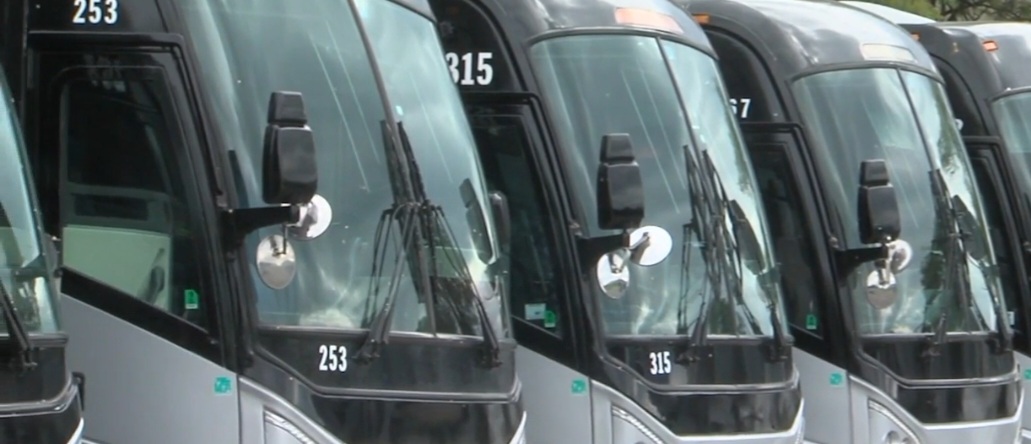
I wouldn't characterize myself as a widely-traveled individual. Beyond these Bowl Game trips for my husband's work, I've flown only a handful of times. My other travels have been in the form of road trips. This being said, I'm savvy enough to know that traveling with a group, like this particular travel party, that has access to chartered jets and bus convoys is the way to go. There's no waiting in terminals; instead, luggage checks and metal detector screenings are done directly on the tarmac. There are no tickets to manage; instead, our names appear on the roster with our assigned seats.

Essentially, besides from packing our own bags and showing up on time, there are no real logistics we need to consider about the trip. It's all been done by competent individuals who make sure things run smoothly for the travel party.

I thought about this during our week in Tampa. Whenever our group needed to travel -- whether to the Beach Day in Clearwater for the pep rally, to downtown for the New Year's Eve parade, or to the stadium on game day -- we'd exit our hotel to the back parking lot, find our bus in the convoy lineup, and climb aboard. Without fail, I always felt better once I took my seat on the bus. I knew I was going to get where I needed to go.

I didn't need to know the directions. I didn't need to navigate myself. I simply trusted that the drivers knew where they were taking us, and because of this, I could enjoy the ride without any thought, without any work, and without any stress.

I'm not sure what's ahead for myself or my family in this new year. The nearly two-year trudge through a global pandemic has taken a toll. I find myself wound more tightly in some ways and unwound more loosely in other ways because of it. I still enjoy being social, yet I secretly love wearing masks in stores because if I see someone I know but I don't have any social bandwidth, I can -- quite literally -- hide behind my mask. (An introvert's dream!)

On the home front, like any parent at any given time, I enter the new year with concerns for my children. They're navigating their own life struggles typical to middle and high school, on top of how the pandemic has shaped their school experiences, social lives, and mental health. On the work front, I'm gearing up for the new semester, which starts next week, and yesterday I completed my classroom visits in preparation to meet a fresh crop of students.

In short, new things are forthcoming. Many of them will be exciting, and, of course, some will be hard. At the same time, challenges from last year still linger. (We've certainly learned from these past two years that troubles have no problems crossing the boundary of a new calendar page, or even a new year.) But one thing I know in this sea of unknown -- something that was solidified last week as I was bussed around an unknown city and safely transported by drivers who knew where to go and what to do -- is that my journey ahead is in good hands. I can sit and rest easy. God loves us, and he doesn't expect us to always know the directions, navigate ourselves, or plot our paths.

I think of a wonderful passage from Anne Lamott's Bird by Bird where she writes: "E.L. Doctorow said once that 'Writing a novel is like driving a car at night. You can see only as far as your headlights, but you can make the whole trip that way.' You don't have to see where you're going, you don't have to see your destination of everything you will pass along the way. You just have to see two or three feet ahead of you. This is right up there with the best advice on writing, or life, I have ever heard."

We've started another year. We'll finish it, Lord willing, by moving forward, perhaps an inch at a time, doing our best with what we know and trusting that God not only sees the full route ahead, but also that he can safely navigate us where we need to go.

I realize how secure I felt during those bus trips around Tampa, how I could rest my head against the back of my chair and be at ease, just enjoying the ride. If I can rest easy like that, I can strive to rest easy as I ask God to navigate my life this year.

0

Keep Calm. Sunday Is On Its Way.


If you didn't know the end of the story, I imagine those days from Good Friday to Easter morning must have been unendurable. There was the obvious horror of the crucifixion, of course, followed by the creeping terror of hopelessness. Sunday was on its way, but the disciples didn't know that. 

I sense that some of us might feel like we're living between Good Friday and Easter morning right now. Perhaps we're facing an obvious horror, something that's too terrible for words. Maybe we're sagging under the weight of discouragement. Perhaps we're just tired and bored and unmotivated and apathetic and irritated and fatigued with social-distancing, home-sheltering, and remote-everything-ing, feeling all kinds of weird feelings because our lives, as we knew them, have been flipped upside down, and it seems like nothing, ever, will get any better (even though the memes have been pretty excellent recently).

But Sunday is on its way. Those middle days of waiting and weirdness, this holding pattern of confusion and quarantine? Those times when problems seem impossible and answers doesn't seem visible? Those darkest circumstances when it feels like dawn will never break with some relief and light?

Those are the middle days. They're not the end of these stories.

Keep calm. Jesus is reminding us that Sunday is on its way.
0

When You're Hurting, This Will Help


My dear readers, I'm writing to inform you that I'm currently not having a mountaintop experience. In fact, in several ways I'm having a lie-on-the-basement-floor-of-life experience, and then realizing that my basement has a leak. And a mold problem. And a horrifying monster. Details are irrelevant, and my humor and faith are still intact, but it's sufficient to say that I'm currently in the weeds. (I realize I'm now mixing metaphors given that my leaky, moldy, monster-inhabited basement suddenly also has a weed problem -- deeply-rooted and dark weeds, nonetheless -- but you're smart and I trust you can make sense of things.)

I hope you're not in a similar life situation. At the same time, perhaps some of you are. Some of you might be deep in the trenches, and some of you might be crawling out of the trenches, and some of you might eventually be headed into them. Troubles in life are equal-opportunity, it appears.
 
Given this, I'm sharing several supportive thoughts that are helping me. I hope they help you, too.

1) Know that there's no shame in being human. This gets me every time. When I'm in a rough patch, I still feel like I should be able to instantly dust myself off and function well, rather than, say, cry through an entire church service, need extra sleep, and require time to process and heal. A friend recently shared, "You don't need to apologize for being human and having emotions," and yet that's exactly how I had started our conversation: "I'm sorry I'm a mess right now."

Being human means that we'll have messes and sometimes be messes. During those times, it's okay to ask for help, whether help comes in the form of a listening ear from a trusted friend, support from a counselor, or medical intervention to restore balance. It's brave and wise to seek help. Seeking help is a step toward healing. And while you're at it, it's also okay to cut yourself some slack and not be on top of your game.

There's no shame in being human. We all are. 

2) Finish sentences with "right now." In the midst of hard phases, those days or weeks when you wake and experience 30 seconds of grogginess before the crushing weight of problems collides with your consciousness, it's hard to remember that you won't always feel this broken. It's hard to remember that it's not permanent.

That's why we actively need to remind ourselves that our trials are temporary. This isn't glossing over heavy issues. This isn't making light of real problems. Rather, it's speaking life and perspective into those problems. It's acknowledging that the situation is bleak "right now," but then declaring that "right now" is not the final result. I'm taking great comfort from this profoundly encouraging video by Kristina Kuzmic:

"So here's a tip: add right now to whatever is frustrating you about parenting or life in general so that you're not putting a permanence on it. You're realizing that whatever is difficult right now doesn't have to be difficult forever. So, for example, 'I'm not getting enough sleep right now. My toddler is throwing daily tantrums right now. My teenager acts like he hates me right now. This divorce is so excruciatingly painful right now.'

This is right now. This is not forever. You are not stuck. A bad year or two or five doesn't equal a bad life. It equals a bad year or two or five. Hard parenting days won't last forever. Hard life days aren't permanent either.

It's not permanent. It's right now."

- Kristina Kuzmic

3) Name your blessings. When life looks bleak, it's easy to focus on what's wrong, creating a hall of mirrors that echos the tough predicaments and bounces pain again and again, creating an infinity loop of our troubles. This isn't good. One remedy is to pinpoint what's going right -- or, even more precisely, to identify one specific thing that has gone well today.

It doesn't need to be huge, but it's good to think about all the things that are, quite bluntly, not terrible. Today I'm thankful that I don't have a head cold. Today I'm grateful that the tech guy came into my classroom to fix the broken computer before my class session finished. Today when I took a walk, the one house far up the hill was burning its wood stove, and I breathed one of my favorite smells. Today I feel encouraged that the sun is shining. After multiple tries the past few days, today I finally spoke with a person -- not a machine -- at a doctor's office, and I'm one step closer to making that appointment.

These are all good things. Not everything is bad right now. Naming my blessings concretely reminds me that while many things are hard, many things are also working just as I'd like them to be working. This changed perspective changes so much. 

4) Look out for others, even in the midst of your turmoil. In the midst of our own pain, it's surprisingly healing to find a way to brighten someone else's day. Granted, sometimes we don't even have one extra millimeter of emotional bandwidth and we must attend to our own wounds, curl up in our beds, or protect our time and hearts. But it's also therapeutic to step out and help someone else who's careworn.

In the midst of my troubles, I don't want to forget that people around me are going through stuff, too. I have a friend facing a troubling health issue, and one whose store just shut down, and one who recently lost her father, and multiple folks who are in the thick of challenges with their kids ranging from behavioral problems, to severe food allergies, to learning disabilities, to bad choices, to stress and anxiety.

When I take my thoughts off my own hurts, I'm able to see their hurts. Then, even in my limited capacity, I'm able to offer something small -- if only a kind word, a whispered prayer, or a brief encouraging text. This habit, just like the "name my blessings" strategy above, takes my thoughts off of my own predicaments, even if momentarily. Please note that this isn't a callous exercise of self-flagellating to "suck-it-up-buttercup" or to suggest that because other people might have it worse than you, then your hurts don't matter. They do matter.

Rather, it's an exercise in compassion, and I notice that when I extend compassion and encouragement, it tends to bring me joy and hopefulness too. That helps.

5) Believe that comfort will come, and it'll expand your ability to offer comfort. The other day when I was really low, I simply had no strength to stand so I didn't even try. I wouldn't deem it an outright collapse, but it certainly was a crumple. I hit the floor and cried until tears no longer flowed, until I was empty and rung out. From that low place, both figuratively and physically, I felt God speak directly to me with this thought: "When you survive this, you're going to have a greater capacity to minister to people who are going through something similar."

These wounds? They'll eventually heal into scars. And those scars? Well, I'll be able to point to them, show others, and say, "I once wondered if a wound this deep would ever heal, but look at how it's healed. I'm not hurting or broken anymore. If this healing happened to me, it can happen to you, too."

One of the promises I treasure from the Bible appears in 2 Corinthians 1:4 and states, "God comforts us in all our troubles so that we can comfort others. When they are troubled, we will be able to give them the same comfort God has given us."

It's beautiful to think on this. These hurts we experience? They're not for nothing. Not only will we be consoled, but when we encounter someone else who's troubled, we'll have the capacity to extend the comfort we've already received.

6) Stand on a firm foundation. The more life I live, the more I know -- not merely cognitively, but experientially -- that when I hit rock bottom, Jesus is there. And landing on Jesus is the firmest foundation I could possibly land on. Even though we might feel like we're walking through the valley of the shadow of death, God Almighty is with us. Right now, I'm reflecting daily on the qualities of God -- how he is a healer, a deliverer, and a counselor. How he is the Prince of Peace. How he's an ever-present help in times of trouble.

I need God to show up in my heart and circumstances now, and ever faithful, he's showing up. When everything around me is shaky, Jesus remains a firm foundation.

Friends, I hope your days currently are filled with more joys than troubles and that everything I've written seems distant for you. If that's the case, I'm delighted. But if you, like me, are struggling, consider this post as a sincere hug. (If only I could somehow get you chocolate, too!)

As many times as needed, repeat these statements to yourself until they become as real and vivid as your pain and circumstances: "I am human, and that's okay. These troubles are right now, not permanent. Even in the midst of pain, many things are still going well. I will be comforted, and I'll eventually use that comfort to help others. None of this will be wasted. And, without a shadow of a doubt, God is walking with me -- daresay, carrying me -- every step."

Rest assured, I'm going to be okay. You are too.

_____________________________

I rarely end posts this way, but if today's blog encouraged you, I invite you to share it widely. If you have a friend who's hurting, would you pass it along to them? And if you'd like to connect with me, please reach out to me at my Robin Kramer Writes Facebook page.  ♥
0

Going Through Stuff

It hasn't escaped my notice that people who are alive are going through stuff. And when I say stuff, I mean hard stuff, the kind of stuff that takes the wind out of our sails, or keeps us up at night, or, in most acute forms, causes us to double over and cry until we feel hollow and limp inside.

These precious, hurting souls still have to function in their daily lives. They still have to report to work, take care of responsibilities, fold laundry, make meals, and put one foot ahead of the other even when they're experiencing the pain of a divorce, the uncertainty of waiting for a biopsy result, the heartache of a child who's gone prodigal, the sting of rejection, the terrible burden of depression, the acute emptiness after losing a loved one, or the waves of panic and anxiety that roll through their heads and hearts, unbidden and unwelcome. When these dark nights of the soul happen to us (as they sometimes do) we realize that doing something "simple," even stepping out to get groceries, can be a herculean feat.

It makes me want to show all the kindness in the world to those around me. When looking at someone's outside, we can't automatically discern what's going on with them inside. And, Lord-have-mercy, we all hit periods when we need softness and grace from others. We all have times when we're members of the walking wounded and we plod through days with hearts that are confused, breaking, and raw. We all have times when our best prayers look something like this:


Today if you're hurting, know that I'm praying for you. May God comfort you. And if you're feeling well, rejoice!

Everyone, eventually, goes through stuff. So let's be good to each other out there today.

2

Not Holding It Together

Years ago when my oldest daughter was in kindergarten, we endured a challenging stretch when she came home from school and melted down daily. We knew she was tired. We knew that attending school five days a week for seven hours each day was a significant jump from attending pre-school for a few hours in the morning twice a week. We knew that more was being demanded of her than ever before.

Even so, one afternoon I remember her flailing on the floor in full-blown meltdown mode, reaching my own breaking point, and demanding, "What in the world is GOING ON with you?"

That's when she said these profoundly mature words:

"I hold it together ALL DAY. When I get home I can't hold it together any more."

I understood exactly what she meant. Whether you're a kindergartner, a teenager, or an adult, there's truth behind her sentiment. Sometimes we hold it together in public as long as we can, and the only place we can safely decompress -- often in irrational, annoying, or ugly ways -- is in our own homes with those who love us the most.

Put another way, our children trust us to still love and accept them when they're the worst versions of themselves, which is beautiful, terrible, and ironic all at once. (Adults do this too. When my dear friend underwent an especially frustrating situation at work, she confessed how she unleashed that stress onto her husband, but then, after pulling it together and apologizing, joked with him, "You know, you should feel privileged because I'd only act this way with someone I entirely trust. It's proof you're in my inner circle.")

I remember her words when my children have rubbed my last nerve raw. I ask for God's intervention: "God, clearly I'm in their inner circle. You put me in this role. I need your help." I urge my children to give each other both grace and space when one of their sisters lashes out, reminding them that we often need the most love and support when we seem to deserve it the least.

And when I feel like this:


I try to remember that advice myself, knowing that I should love deeply because love covers a multitude of sins. Grace and space. Try to give this difficult person grace and space.

The people closest to us might not always be able to hold it together. We might reach our own thresholds where we can't hold it together any longer, either. But thank God that he desires to be our innermost circle, and he invites us to be entirely real and open with our thoughts and feelings when we approach him.

He can handle our worst. And even when we can't, he's capable of holding it all together.
4

When You're Not Quite Yet Back to School


This is it. In one week, school starts for my kids and the Penn State semester starts for me. This upcoming week -- our last official week of summer -- will be crammed with school-related events: meet-the-teacher hours, orientations, and new building tours for my kids; meetings for me on campus.

I'd be lying if I told you that there wasn't some low-grade nervousness surfacing. My oldest daughter, a rising 9th grader, is headed to our town's massive high school. My middle daughter, a rising 6th grader, is entering middle school. My youngest daughter, an incoming 4th grader, will be changing buildings. My own fall teaching schedule, one that had been predictably set for the last month, is now in flux due to some last-minute department changes. I'm still not fully sure what my day-to-day routine will be. I only know it will be busy.

I'm comforted by the reminder that none of this ruffles God. He's not bothered by change. He's constant in our daily routines, even if those routines will be new to us. He knew the classes my kids would be assigned to, what teachers they'd get, what lunch periods they'd have, what friends would (or wouldn't) share their schedules. The same goes for me. The entire college course registration process, which can feel clinical and random on a campus with over 45,000 undergraduate students, electronically assigns me a specific grouping of 24-30 students per class. I can trust that those students (who appear as just names and ID numbers on a website right now) are the exact students who are supposed to be there.

When I think of the upcoming school year like this -- that God has been overseeing and will continue to oversee the details -- I can relax. I can walk in assurance that He's with me, every step.
0

Listen to the Right Voice


My husband and I will be speaking at our church this upcoming Sunday morning, so this past week we've been preparing and putting the final touches on our message. I've loved merging our talents and working together.

Meanwhile, this past week I've also had several encounters that have made me legitimately question my aptitude as a parent and a human, encounters that would make me question whether I'm the right person to be entrusted with a microphone and an audience for 30 minutes.

This morning as I was reviewing my message notes, I added this sentence in the margins:
Listen to what God is saying to you and about you, not what a critic is saying, even if that critic is yourself.
As soon as I wrote this, I remembered a painful and complex situation that I was involved in multiple years ago where a person I trusted denigrated my character and questioned my motives. My conscience had been clear about the situation, but the more I dwelt on the accusations (and, friends, I dwelt on them heavily), the more I wondered if they were true, if I really was the awful person who was being described.

After months of miserably grappling with the situation, I finally had an epiphany: If this person's accusations against me were wrong, it was going to be okay because God is my defender. The accusations wouldn't hold.  (Psalm 37:6 says "He will make your righteousness shine like the dawn, the justice of your cause like the noonday sun.")  But even if the accusations were accurate, it would still be okay because God was my forgiver. He would cleanse me, forgive me, and restore me. He's a God who specializes in making all things new, so even if they were legitimate, my flaws didn't have to be my story.

Such freedom!  When I am wrongfully accused, God defends! When I'm wrong and come to him repentantly, God forgives!

So today, even while sitting at my kitchen table reviewing our notes for Sunday morning, I was encouraged once again to listen to the right voice. Not the voices of my critics -- and not my inner accusatory voice when I'm my own worst critic. God is speaking something much different, much better, over me.

I love you. I forgive you when you confess your sins to me. I'm protecting you. I defend you. I'm your faithful helper and guide in these circumstances. I will never leave you or forsake you.

That's the right voice to listen to.
0

Be Still and Know


Yesterday evening my church hosted a special service.  I knew the event would be good, but the timing wasn't.  By the time I arrived (nearly a half hour late) with my three kids in tow, we all felt frazzled.  I ushered the girls to their youth classes and then grabbed a seat in the back of the sanctuary, not convinced if my efforts to get there would be worth it.

The very first verse I heard the speaker share was this:
Be still and know that I am God.  (Psalm 46:10)
I had forgotten about this verse. (How appropriate in the face of all my rushing.)

God directly invites us into stillness as a way of knowing him.  He doesn't advise, "Get busy and know that I am God."  He doesn't say, "Overcommit and know that I am God" or "Burn yourself out and know that I am God."

Instead, he invites us to be still.

So there I sat in the back row, quieting my heart, subduing my racing mental to-do lists, and remembering how essential stillness is to connecting with God.

Sometimes we all need the reminder.

Be still.  Know that God is God.
0

Don't Let Emotions Drive the Bus

I felt remarkably alive last week.  I'm not entirely sure what to attribute this to.  Perhaps it was the extra hour of daylight after changing the clocks.  Perhaps it was the warmer-than-normal March temperature, as if spring was making an unexpectedly welcome appearance.  Perhaps it was because my house was organized, or my workload was strangely manageable, or my kids were in good moods.

Everything worked.  Like I was immersed in some sublime bubble of sunshine and good vibes, I found myself navigating each day with ease and stability.

Of course, this isn't always the case.  I also experience weeks when simple tasks feel like giant hurdles, everything is blah, and conversations with my best friend go like this:

BF: How are you?

Me: Fine.  I'm fine, except that I feel off and everything is weird.  Actually, it's possible that my whole life is wrong.  I don't know how to parent.  I'm pretty sure each of my kids is going to need therapy when they're adults.  Instead of being a productive human, I spent the last 45 minutes scrolling social media while eating Girl Scout cookies.  I have an alarming amount of wrinkles appearing on my forehead.

BF: Go on.

Me: I'm nursing the suspicion that all of my worst traits are becoming more pronounced.  I'm thinking about becoming a hermit.  I wore cute flats yesterday, but they gave me bad blisters and that's depressing because I don't even know how to wear shoes correctly.  I also tried to give up caffeine, but there was a sale at the grocery store and I came home with five six-packs of Dr Pepper.

BF: Anything else?

Me:  I'm seriously contemplating cutting bangs.

BF: You need an intervention.

Don't we all have days like this?  When we follow that rabbit hole of chaos and craziness as far as it can possibly go, when we cry at an episode of The Office because Jim looked at Pam in just the right way but our husband forgot to pick up milk, when we can't make any decisions, when we think we're not fulfilling our purpose, when we're sure that everything in our existence is, for lack of more precise critiques, just off and dull and wrong and meh.

These are days when it's especially important to not let our emotions guide us too powerfully.  These emotions are irrational; they'll steer us right into a brick wall. I've heard it explained this way:
Emotions are like toddlers. You can't put them in the trunk, but you can't let them drive the bus either.
Emotions are important -- and they're meant to be felt.  We can't ignore them, proverbially throwing them in the trunk.  (Ignored emotions don't go away.  They simply fester, then surface more potently and irrationally later.)  But we also can't put emotions in the driver's seat and let them lead us down every road.  That's merely an invitation to a life that's perpetually sidetracked and adrift.

Instead, there's a healthier balance: emotions can be in the backseat.  They can be companions that we consider and attend to, but they don't need to control us and chart our course.

I'm a firm believer that God wants us to be at peace -- not only with Him and others, but also with ourselves -- and that means that we can come to grips with our own emotions.  Irrational emotions aren't terminal, they're human.  And emotions aren't forever, they're transient.  And emotions, while certainly triggered by some circumstances, don't need to be beholden to those circumstances.

Last week my emotions looked like a well-cropped Instagram picture -- tidy, positive, aesthetically pleasing, and filtered with some happy glow.  It was awesome.  Who knows what will come next week?  My feelings might be pointing me toward the threshold of a really bad haircut, but this doesn't mean that I need to step over that threshold.

Let's find a healthy balance with our emotions.  Let's keep 'em in the backseat.  We can feel them out and give them some attention (this is healthy), but we don't need to hand over the keys to something so fickle.

Don't let emotions drive the bus.


Like this post?  Share it with others or drop me a comment below!
1

Take What You Need

Every so often while walking to class, I encounter a particular type of announcement tacked to a campus bulletin board.  There's nothing special about the appearance of these signs -- just standard 8x11" papers printed in black and white -- but there's something special about the concept.


Each sign invites you to take a compliment.  I imagine people tearing off a tab and then tucking the slip of paper in their pocket, placing it in their wallet, or passing it to a discouraged friend.

I've seen similar signs offering "Take What You Need," followed by a litany of helpful characteristics (courage, patience, love, hope, or strength) hanging at the bottom of the page, just waiting for a needy passersby to tear one off, as if arming themselves with that attribute.

I can't recall ever passing one without at least one tab ripped off.  Encouragement is a legitimate need.

Nearly every time I encounter these signs, I think about the concept of "taking what I need" in life from a perspective of faith.  What if these qualities are always waiting for me and I just have to take action and grab them?

Rather than fretting about decisions or worrying whether my strength will be sufficient for a looming task, what if I immediately remembered that I have a source of wisdom and strength at my disposal?  What if I asked God for the things He promises -- whether peace, belonging, forgiveness, or whatever else I need at the moment -- and then figuratively tear off that tab, taking what I need right from the start, not as a last resort after I tried to figure my predicament out on my own?

What if I took the verse, "You have not because you ask not," at its word and started asking, really asking?

Perhaps God has more in store for us and He's simply waiting for us to ask and take what we need. (He's offering, after all.)

Today, let's go ahead and ask.  Then let's dare to reach out and take what we need.

0

Successful Parenting When You're in the Storm


While I'd love to report that harmony continually reigns in my house, this isn't the case. We're a normal family. We say things we regret, get under each other's skin, fight, fume, and eventually patch the rough moments with apologies and forgiveness.

I forget that this behavior is normal. After years of practice, I assume we already should have mastered lessons of good manners and conflict resolution.  I secretly worry that any sign of dysfunction is terminal. When one kid does one rotten thing on a day when I already feel off, I can spiral quickly, suspecting that every parenting decision I've made up until that point—including, but not limited to, choices about my kids' diets, exercise, technology use, bedtime, activities, and disciple—has been wrong.

It escalates quickly. Let's say I plan a craft to entertain my younger daughters while my husband travels, but they ruin the evening by launching into an epic fight over which canvas to paint (which is a purely hypothetical example, not something that happened last weekend.)  Instead of thinking, "Well, this behavior isn't ideal," if I'm depleted and hormonal enough, in seconds it's not merely about the canvases. It's about how I've somehow failed to teach them better, or how they'll never grow up to be courteous or sane members of society.

Of course, this isn't true. It's merely a storm of swirling emotions, howling my heart’s deepest concerns.

In these moments, I think about the disciples as they crossed the Sea of Galilee. They saw the waves, heard the wind, and felt the boat's terrible lurching. In the presence of these alarming sensory cues, their deepest fears surfaced. The worst-case scenario finally had been confirmed: the ship was going down. They would die.

Meanwhile, Jesus slept. Jesus was in the boat with them, yet he remained unaffected by the waves and wind. The storm wasn't in him.

Don't we all need this ability to keep the storm "outside" of us when we parent and navigate life? When chaos laps at our feet, waves of craziness crash, or toddler tantrums and teenage eye-rolls threaten to sweep us away, we can acknowledge the storm's existence.  But then, in the next breath, we still can announce, "Peace, be still."

This declaration of peace not only pertains to what happens around us; it's equally important for what happens inside us.  We can see external storms unfold around us: children melt down, belligerently argue with their siblings, or speak careless words of disrespect.  As we watch, invisible storms, which are even darker and sometimes more damaging, rage inside us: worries that our kids are going the wrong way, concerns that they'll never internalize what we’ve taught, or suspicions that their bad behavior indicates that, somehow, as parents we've screwed up everything.

Like the disciples in the Sea of Galilee, our worst-case scenario seems to be confirmed. These ships of ours? They're taking on water. They're going down.

But Jesus would say, "Peace, be still." Not only to the conditions, but also to our hearts.

Over the years, I've accepted that it’s not the best time to engage in deep soul-searching or emotional introspection when storms actively rage around me. Let's be honest: these aren’t the right times to entertain a new haircut, much less to critically evaluate my parenting performance or analyze my life purpose.

No, when storms rage, it's simply time to ride them out and declare peace. It's enough to teach my kids that their feelings are legitimate, but new feelings will blow through soon enough. It's enough to accept that chaos is real, but it doesn't have to rule.  It's enough to survive by telling my emotions, "I feel you, but you don't have the final say in how this scenario turns out. That right belongs to Jesus, and he says Peace."

And then, because this is all extremely tiring, it's also enough to take a nap. (I mean, Jesus slept, so clearly, this response is biblical. Just following in his steps.)

Storms will come; they always do. But we can keep the storms outside of us, even if we're inside of them.
4
Back to Top